We seek proposals for a small number of original essays to include in Hands On History, an edited collection focusing on practical and embodied approaches to the history of media technology.
The collection explores the relevance of the new methodology of hands on history to the study of media. Forging links between the diverse fields of media studies, history of technology, and media archaeology, this collection brings together current practices in museums and academic research into hands on history in the fields of image-based media. These range across:
computer games,
photographic history,
television and film,
professional and domestic practices,
industrial production,
leisure activities.
We seek proposals for essays of between 5,500 and 6,500 words in length. They may be on Any subject which relates to “hands on” research or practice around the image-based media, broadly defined. The editors will be very happy to discuss and develop proposals in advance of submission.
The collection is under contract with Routledge and will be delivered to the publisher in 2018.
Please send enquiries or a short (approx. 200 words) proposal, along with a CV or resumé, to nick.hall@rhul.ac.uk no later than 10 July 2017. The deadline for submission of accepted proposals will be 13 November 2017.
The Maintainers, a blog about “maintenance, infrastructure, repair, and the myriad forms of labor and expertise that sustain our human-built world” currently features a guest post by ADAPT postdoctoral researcher Nick Hall:
“My modest – and probably not very original – suggestion here is that museums are excellent preservers of artefacts, but not very good preservers of maintenance. That is where the value of restorers and enthusiasts like Steve Harris becomes most obviously evident. Through the act of restoration, they preserve maintenance activities. You cannot bring an outside broadcast truck back to life without repeating the many everyday tasks – lubrication, soldering, replacing worn parts – which characterised the artefact’s original life. Some museums restore and operate some of their artefacts (for example: the Science Museum owns trains which sometimes run on the mainlines) – but regular restoration and operation of artefacts is the exception, not the rule, in the museum context.”
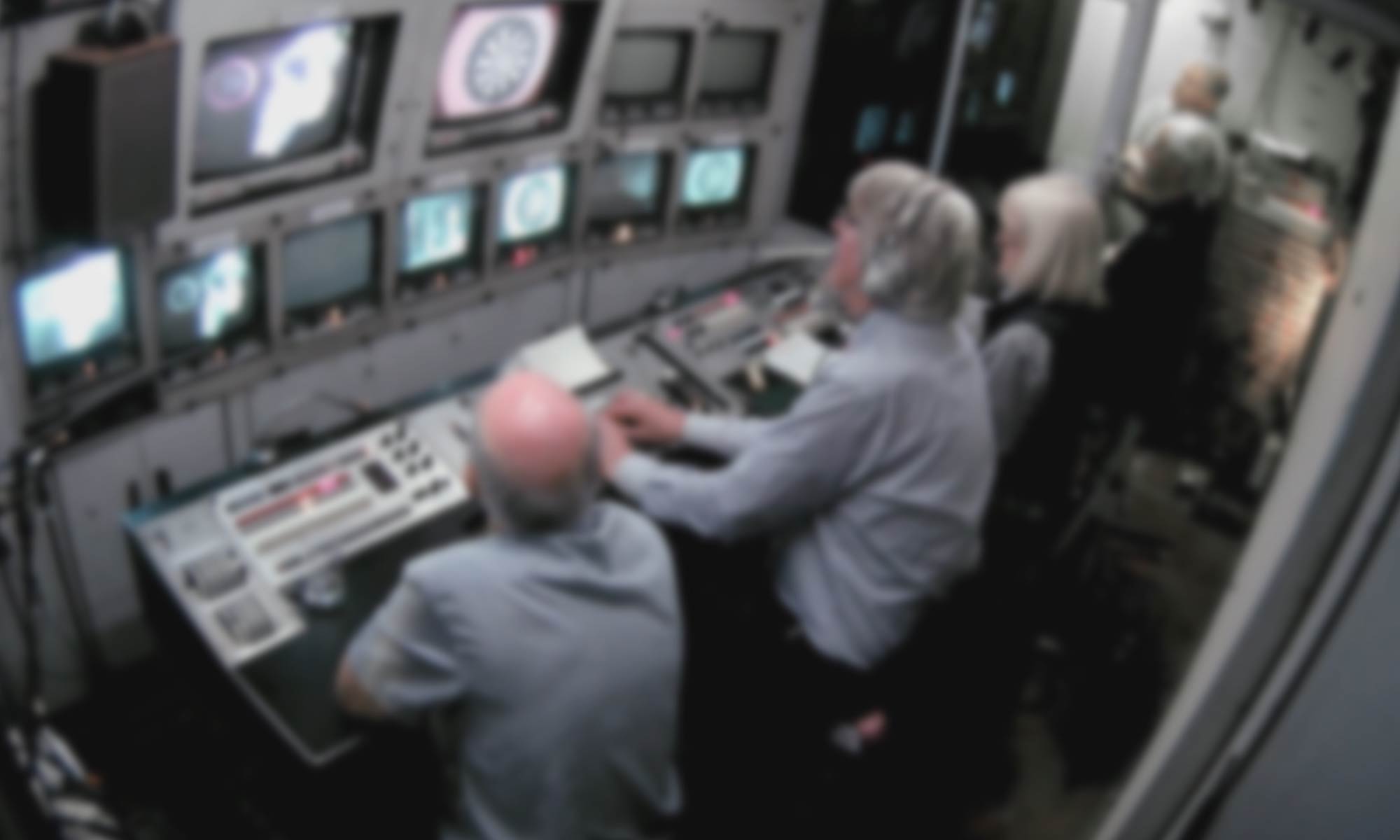
A team of television historians will travel back in time as they bring a vintage BBC outside broadcast truck back to life in North Wales, using the latest fixed-rig multi-camera technology to show how television was made in a bygone era.
Working with Flintshire-based broadcasting history enthusiast Steve Harris, the team from Royal Holloway University of London will reunite veteran cameramen, directors and engineers with North 3, a restored colour mobile control room dating from the late 1960s.
In order to capture the complicated action taking place within a busy outside broadcast truck, the event will be filmed using a fixed rig of 12 cameras, installed by production company Lion Eyes.
The aim is to capture every flick of a switch, push of a button and slide of a fader as the veteran crew of cameramen and technicians – most of them now in the 70s and 80s – return to work in an OB vehicle that’s long been consigned to history.
North 3, a Type 2 BBC Colour Mobile Control Room, travelled the length and breadth of the country during the 1970s, relaying live footage of Royal Ascot, The Open from St Andrews and the Royal Variety Performance from the London Palladium.
It ended its life with the BBC in the early 1980s, and spent several decades decaying at an airfield in Devon, before being rescued and restored by Hawarden-based television historian Steve Harris.
Now ADAPT’s researchers from Royal Holloway are using their European Research Council funding to embark on a hugely ambitious “hands on” history event during which a full outside broadcast crew will be re-united with the restored vehicle to recreate a 1970s sports television production.
The experiment, which will take place next week (May 17, 18, 19) will be the first time that anyone has attempted to see the restored North 3 operational and staffed by its original crew. The vehicle, an analogue ancestor of today’s digital satellite outside broadcast trucks, is the only survivor of its type in working order.
Working with Steve Harris, the team from Royal Holloway have located a team of former outside broadcast camera operators and engineers. For first time in several decades, they will be reunited with North 3 and re-live the experiences of their earlier careers.
Using restored 1970s television technology, the team will record a darts match and conduct interviews with former television production personnel. The multi-angle exercise will help the Royal Holloway team, led by Prof John Ellis of the college’s Media Arts department, to learn more about how television was made in the 1970s and 1980s.
Prof Ellis said: “Television has seen vast technological changes since the 1960s, and some of the greatest changes have taken place in outside broadcasts. Our work with North 3 will help to document technologies and ways of working from the heroic age of television, which are now at risk of being forgotten.”
Digital producer Amanda Murphy, who is organising and directing the event, said: “We were battling with how to cover a 20-strong veteran crew in the rather tight space of the old Type 2 OB, so Martin’s fixed rig solution is ideal.
“It means we get coverage of all the different units at work simultaneously. Most importantly, we can step back and intervene far less than we would in traditional TV documentary filming allowing this re-united crew to fully engage in the experience of working with this OB and old restored kit for the first time in decades.”
The complexity of the event means that it will not be open to the public, but footage and interviews from the event will be uploaded to YouTube during the week.
Notes to Editors
Press photographers and video journalists are welcome to visit the location by prior arrangement.
North 3 and the team will be at Northop Hall Hotel, Hawarden on May 17, 18, and 19. Interviews can be arranged with Steve Harris, the project leader Prof John Ellis, and the producer Amanda Murphy.
For further information and to organise photo opportunities / interviews, please email Nick Hall – nick.hall@rhul.ac.uk.
In May, the ADAPT project filmed its first full-scale simulation: an historical re-enactment experiment designed to reunite television film production veterans with old equipment, in order to better understand how television was made in the past.
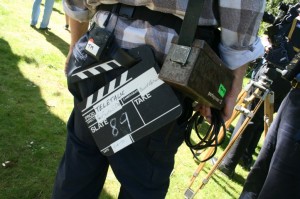
We assembled a team of retired television production professionals, all of whom – at one stage in their career – had worked from the BBC’s Television Film Studios in Ealing. With the help of equipment collector and camera operator John Adderley, we borrowed hundreds of kilograms of cameras and sound recording equipment, along with all the lighting and cables necessary to recreate the technological conditions of 1960s television film production.
I blink in disbelief at having pulled this off…as near 90 year old Ray Sutcliffe (once editor of BBC flagship series, Chronicle) David Whitson cameraman (and DOP) looking boyish still in retirement (made Man Alive and series like The Voyage of Charles Darwin ) John Adderley acting as camera assistant (Tribal Eye, Man Alive) Alex Branson PA, Bill Chesneau on sound, John Hooper as sound assistant and Alan Muhley electrician, all walked into shot carrying the Éclair camera, magazines for loading film, a Nagra 3 sound recorder and an old DK25 boom, a hefty wooden camera tripod and various redheads and blonde lights from the era, it felt a bit like a Fellini film! The combined age of the crew was likely somewhere around 600 yet this seasoned crew from the 60’s and 70’s worked together like they’d just made a telly programme yesterday!
Now we face a challenge almost as substantial as bringing together this team and providing them with working examples of obsolete equipment. As Amanda noted last month:
Now for one of the biggest challenges of the project- making sense of and editing the footage! […] For ADAPT I’ve got to wade through 1TB of material… that’s around 15 hours of footage with seven people often talking all over each other, sometimes demonstrating sometimes ‘presenting’ to an imaginary audience, sometimes getting on with filming, sometimes explaining it, often using old familiar jargon, often walking off camera or asking for a chair or standing listening to others.
We have now started to make sense of all that footage, and we have begun to assemble it into sequences which we hope will be of use to historians of film and television. We’re pleased to be able to start releasing rush edits of some of the footage we shot back in May. These take two forms. Firstly, we are ready to share three bite-sized portions of the main filming event. These give a flavour of what we asked our veteran crew to do, and how they responded to our challenge.
In the first of these videos, you’ll see the crew preparing their equipment: loading film magazines, checking the focus of lenses, and synchronising sound recording equipment.
In the second clip, you’ll see what happens in the few minutes before their filming begins and after the “cut” is called. We asked our crew to film a short interview with our principal investigator, Prof. John Ellis. In this clip, we see the crew explain to John how they intend to film him, and make final preparations to roll the film and record sound. After the interview itself – which is not shown in this clip – the crew confer with each other in order to establish whether the various technologies operated correctly, and whether further shots need to be taken.
The third and final clip from the simulation shoot shows our crew filming in a different environment: outdoors, on the grounds of Royal Holloway, University of London. What we didn’t tell our crew in advance was just how tricky that would be: we positioned them next to a busy road and underneath Heathrow’s departure flightpath. Asking the crew to carry out an interview while motorbikes roared past and jets buzzed overhead was as close as we could get to recreating the conditions of a busy city.
In addition to these clips, we have also uploaded a ten-part playlist of clips from a filming session we carried out with lighting cameraman David Whitson and electrician (i.e. lighting expert) Alan Muhley. Our approach here was different: rather than ask David and Alan to use the old equipment, we simply filmed them handling it, while talking about their memories of using different types of lighting equipment. This is the first of several such ‘reunions’ between people and technologies: we will soon release similar playlists which document our participants’ memories of sound recording equipment and 16mm film cameras.
These clips are not fully contextualised yet. They are the rough, raw, products of our historical research. They are data, not findings. In time, we’ll be working on edited packages of material which will explain in detail how technologies and people worked together. Finally, we intend to release – to the fullest practical extent – our rushes, under a minimally restrictive Creative Commons licence, so that anyone can build upon, remix, and contest, the results of our research.
Nick Hall is a research officer in the Department of Media Arts at Royal Holloway, University of London.
Note: this call for papers closed on 28 August 2015. The website for the resulting conference can be found at http://handson2016.wordpress.com
8—10 February 2016 Geological Society, London
Confirmed keynote speakers include:
Prof. Susan J. Douglas (Professor of Communication Studies, University of Michigan)
Dr. Gerard Alberts (Associate Professor of the History of Mathematics and Computing, University of Amsterdam)
Prof. Annie van den Oever (Faculty of Arts, University of Groningen)
Prof. Andreas Fickers (Faculté des Lettres, des Sciences Humaines, des Arts et des Sciences de l’Education, University of Luxembourg)
“Media Scholars and Amateurs of All Countries and Disciplines, Hands-on!” *
Recent years have witnessed a growing turn to experimental historical research in the history of media technologies. In addition to archival investigation and oral history interviews, historians and enthusiasts are increasingly uncovering histories of technology through hands-on exercises in simulation and re-enactment. Equipment lovingly restored by amateurs, or preserved by national heritage collections, is being placed in the hands of the people who once operated it, provoking a new and rich flood of memories.
The turn to experimental research raises profound methodological questions. The unreliability of narrative memory is well proven, but what do we know about the limits of haptic and tactile memory? To what extent is it possible to elicit useful memories of technological arrays when parts of those arrays are missing or non-functional? How do the owners of old equipment shape the historical narratives which are stimulated by their collections?
Hands-On History is a colloquium designed to facilitate discussion of these issues between historians, users, curators and archivists (amateur and professional) who are making use of and taking part in these historical enquiries. In addition to a series of keynote presentations by leading scholars in the field, the event will also include stimulating workshops on specific focus areas. While the focus of the event will be on media technologies, broadly defined, we invite contributions from other areas of technology and from other academic disciplines.
This colloquium aims to make a decisive intervention in this emerging area of academic interest. It is part of the ADAPT project, a European Research Council funded project investigating the history of television production technologies through hands-on simulations. Research conducted by ADAPT will form a key case study for the colloquium.
In order to facilitate productive discussion, numbers will be limited. It is expected that papers presented will form the basis of an edited collection focused on hands-on historical research.
We invite proposals for research presentations, panel discussions, and historical equipment demonstrations. Presentations may take whatever format is most appropriate, and we welcome approaches which deviate from the traditional 20 minute lecture.
Vintage television production equipment took centre stage last week as a veteran team from the BBC’s Television Film Studios at Ealing were reunited with obsolete film equipment as part of a unique historical re-enactment experiment.
The event took place as part of ADAPT, a European Research Council funded project designed to improve our understanding of the changing ways in which technology has been used to make television since 1960.
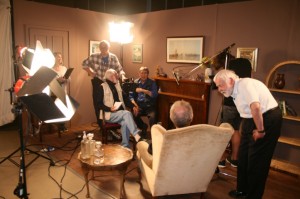
For the retired film crew, it was a first chance in decades to revisit the lights, cameras, and tape recorders they once used every day. Camera operators David Whitson and Brian Tufano were joined by sound recordists Bill Chesneau and John Hooper, production assistant Alex Branson, electricians Alan Muhley and Tommy Moran, and director Ray Sutcliffe.
Vintage equipment collector John Adderley, who also fulfilled the role of camera assistant, provided a vast range of equipment from his personal collection, including two Arriflex St cameras (one with an external blimp) and an Éclair NPR camera.
The range of sound equipment available included a wind-up EMI L2 and two Nagra tape recorders. Lights were, as far as possible given current safety regulations, those which would have been used at the time.
The veteran crew demonstrated how the equipment worked, rediscovering it as they went. They explained and demonstrated their roles and how they used to work together. They shot a number of interior and exterior sequences onto film.
The experiment provided ample evidence for the value of carrying out such hands-on research in the history of technology. Handling the vintage equipment reminded participants of working patterns and routines which may not have been recalled in a more traditional “oral history” interview. Using the old equipment brought to light forgotten advantages and limitations of different technologies.
The entire exercise was recorded on multiple Sony PMW-100 cameras. The participants were equipped with wireless microphones which enabled them to freely discuss their memories and actions with ADAPT researchers and each other.
The shoot was directed by ADAPT team member Amanda Murphy, with assistance from Royal Holloway staff including media arts technician Sri Southall and studio manager John Walsh. Southall directed camera operators Joe Burns and Zak Derler, while Walsh – assisted by Summer Walker – oversaw the event’s complex sound recording requirements.
Additional assistance was provided by Molly Pearson and Patsy Webb, who – along with ADAPT PhD students Rowan Aust and Tim Heath – ensured that participants were taken care of and digital files were appropriately transferred to secure storage.
ADAPT is led by Prof. John Ellis and funded by the European Research Council and will run until 2018. Future simulations will trace the other major ways of generating television programmes, from outside broadcast to video tape editing.
Please note that these studentships have been filled and are no longer open to applications.
The Department of Media Arts at Royal Holloway, University of London is pleased to advertise two fully-funded doctoral studentships in the field of Television History / History of Technology.
These studentships offer an opportunity to join ADAPT (the Adoption of new Technological Arrays in the Production of Broadcast Television), a five-year, £1.3m research project led by Professor John Ellis.
The studentships will cover full UK fees plus an annual maintenance grant of £16,400. The standard length of the award is three years of full time study. It is anticipated that the projects will commence on 1 October 2014 and conclude by 30 September 2017.
Studentship One will investigate the evolution of tape-based and digital sound recording in British television production and the conflict between the demands of sound and camera, particularly on location.
Studentship Two will investigate the rapid change from 16mm film cutting to digital editing in the context of British television production.
Successful applicants will hold, or will expect to have completed by September 2014, a Masters degree in Film Studies, Television Studies, or a related subject. Experience of research in written archives and/or the collection of oral history will be beneficial, as will an understanding of the methods and concerns surrounding the history of technology.
The successful applicants will join a busy department with an active research culture in the fields of film, television and digital media. In addition to working under the supervision of the project leader, Prof. John Ellis, they will benefit from the support of a research team including Dr James Bennett and Dr Nick Hall.
Applicants should first complete an online application form, which can be found at this link. Please select ‘Media Arts PhD’ under ‘Programme’ and add ‘ADAPT’ under ‘General Research Area’.
Applications must be received by 5pm on Monday 2nd June, 2014. Interviews are planned for the week of 16 June 2014.
Welcome to ADAPT’s new website. ADAPT aims to research and document the history of British broadcast television technology between 1960 and the near-present. This five year project has been funded by the European Research Council.
Over the years to come, we’ll fill this space with details of the project as it develops and begins to produce insights into the history of British television. We will also provide regular blog posts from members of the project team and other television scholars and researchers.
In addition to carrying out academic research, we also want to hear from the many enthusiasts and local historians who research television history. Over the next five years we will organise a number of events which will help to promote and share these important sources of television history.
We look forward to sharing and discussing our research with you soon. If you’d like to hear more about the project, or offer your own memories of British television production since 1960, you can email us at adapt@rhul.ac.uk. If you prefer to write a letter, our address can be found on the Contact page of this website.
 For the retired film crew, it was a first chance in decades to revisit the lights, cameras, and tape recorders they once used every day. Camera operators David Whitson and Brian Tufano were joined by sound recordists Bill Chesneau and John Hooper, production assistant Alex Branson, electricians Alan Muhley and Tommy Moran, and director Ray Sutcliffe.
 The experiment provided ample evidence for the value of carrying out such hands-on research in the history of technology. Handling the vintage equipment reminded participants of working patterns and routines which may not have been recalled in a more traditional “oral history” interview. Using the old equipment brought to light forgotten advantages and limitations of different technologies.
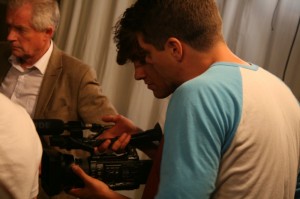 The shoot was directed by ADAPT team member Amanda Murphy, with assistance from Royal Holloway staff including media arts technician Sri Southall and studio manager John Walsh. Southall directed camera operators Joe Burns and Zak Derler, while Walsh – assisted by Summer Walker – oversaw the event’s complex sound recording requirements.